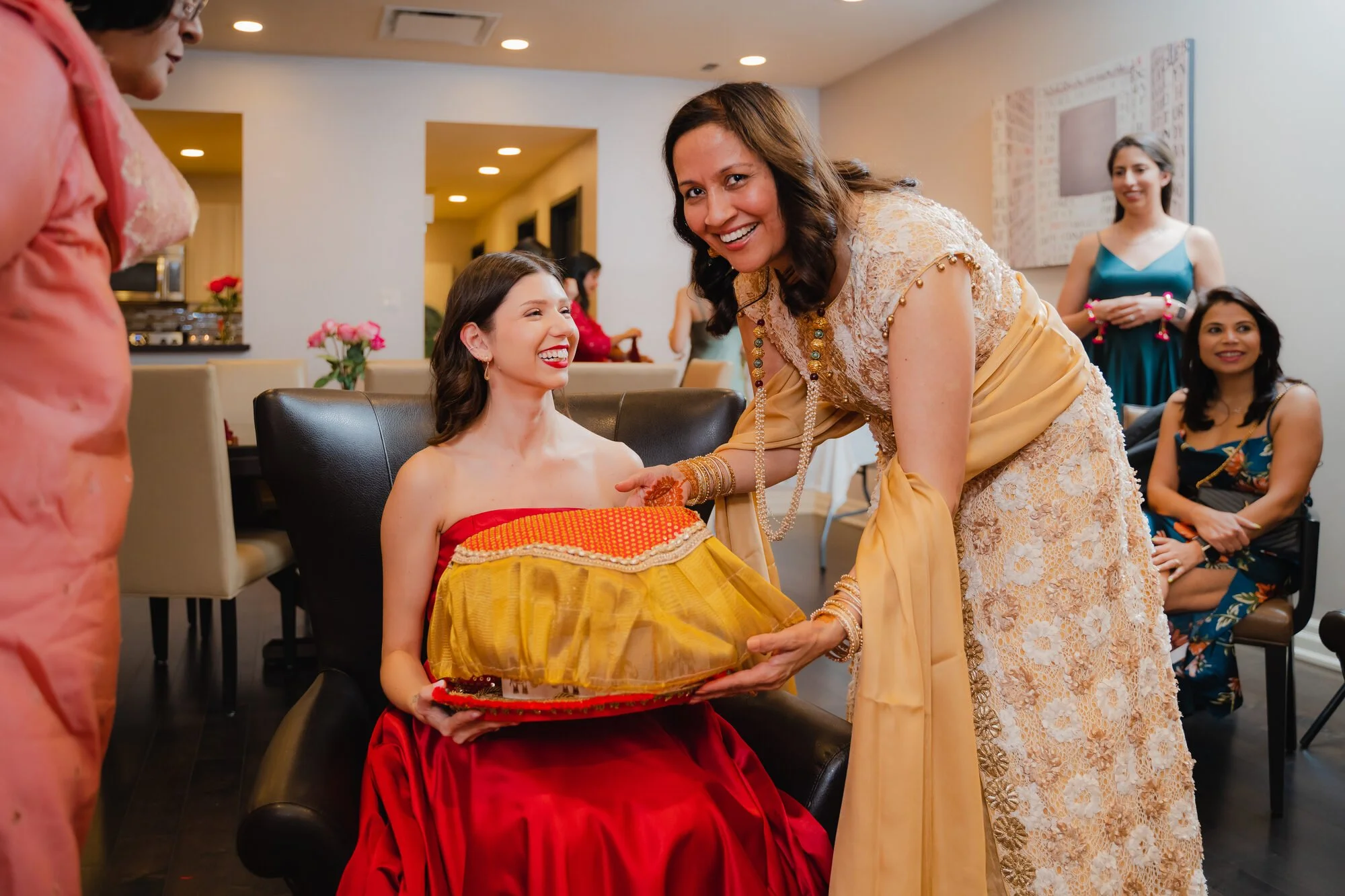
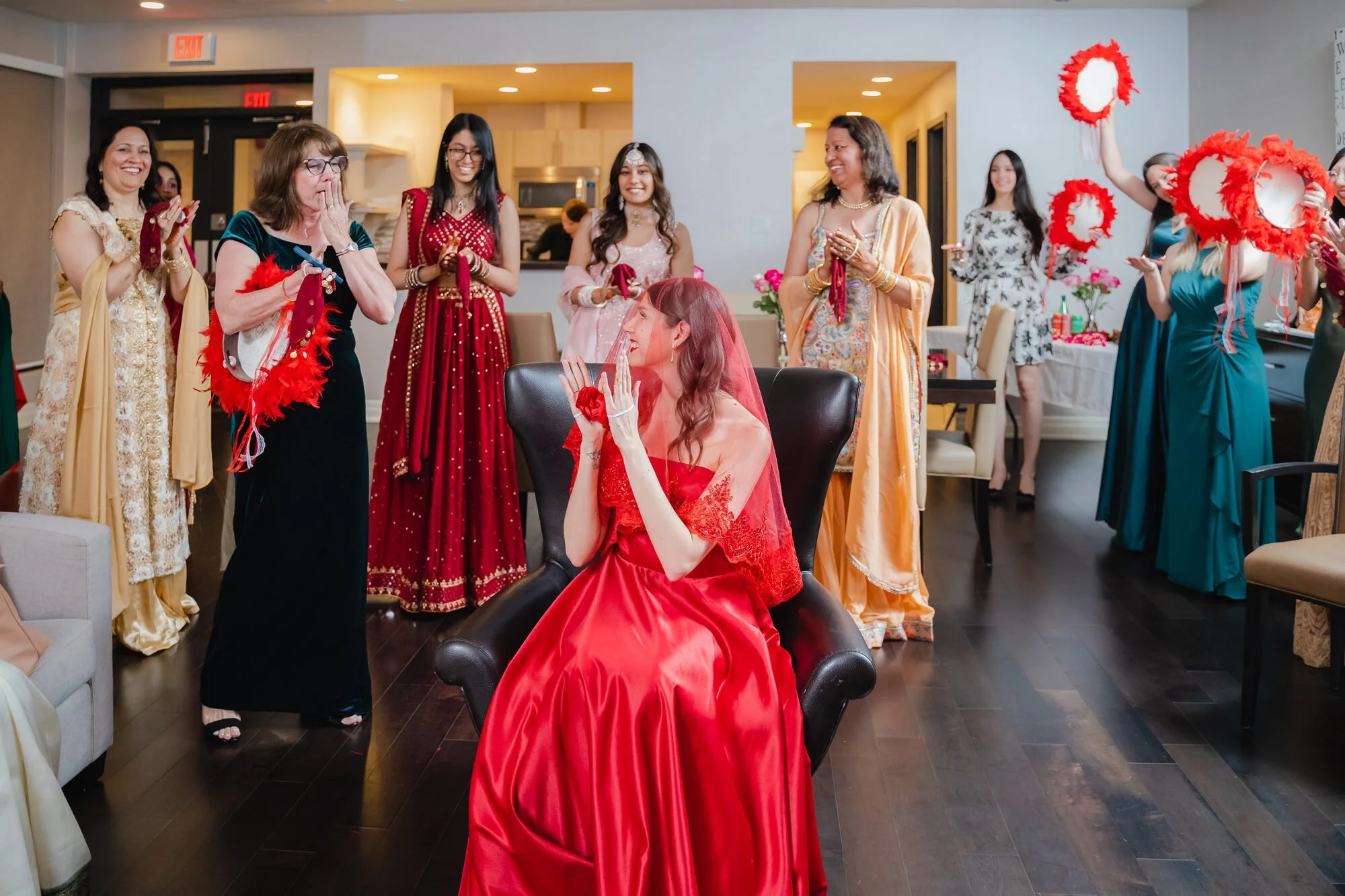
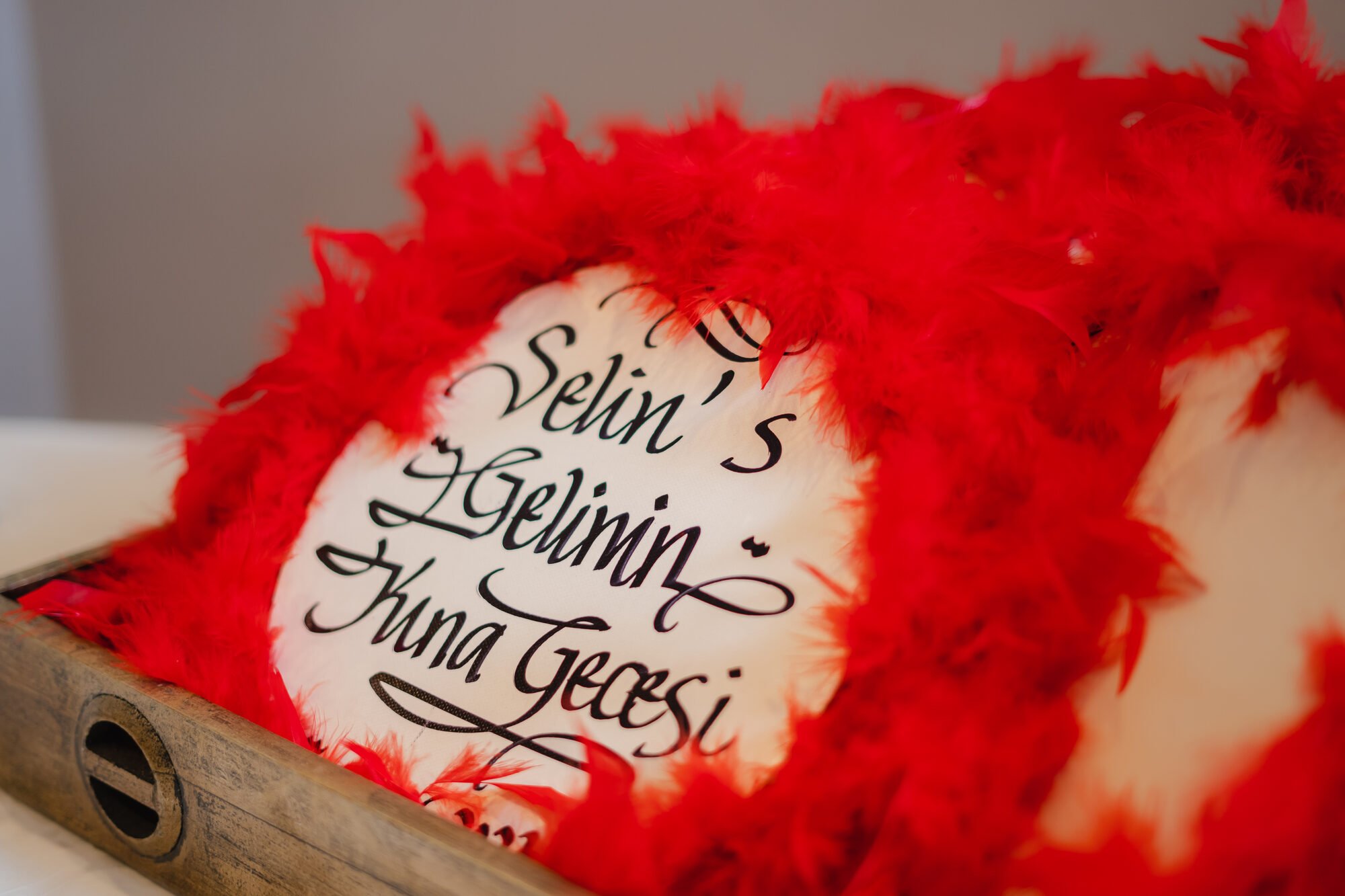
Turkish brides have a kına gecesi. Indian brides have a mehndi. Both centre on henna, both happen before the wedding, and both are about a bride leaving one family and joining another.
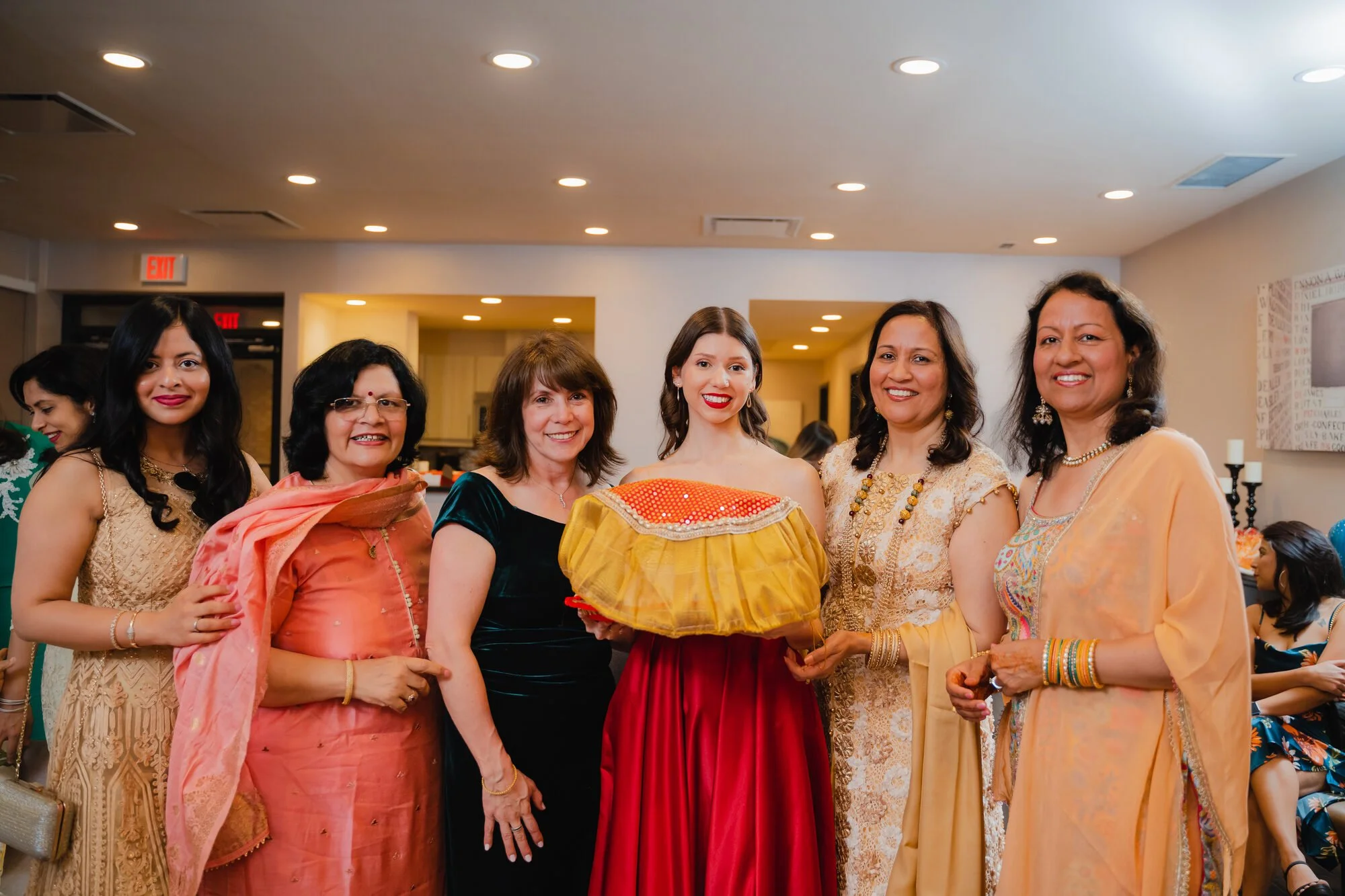
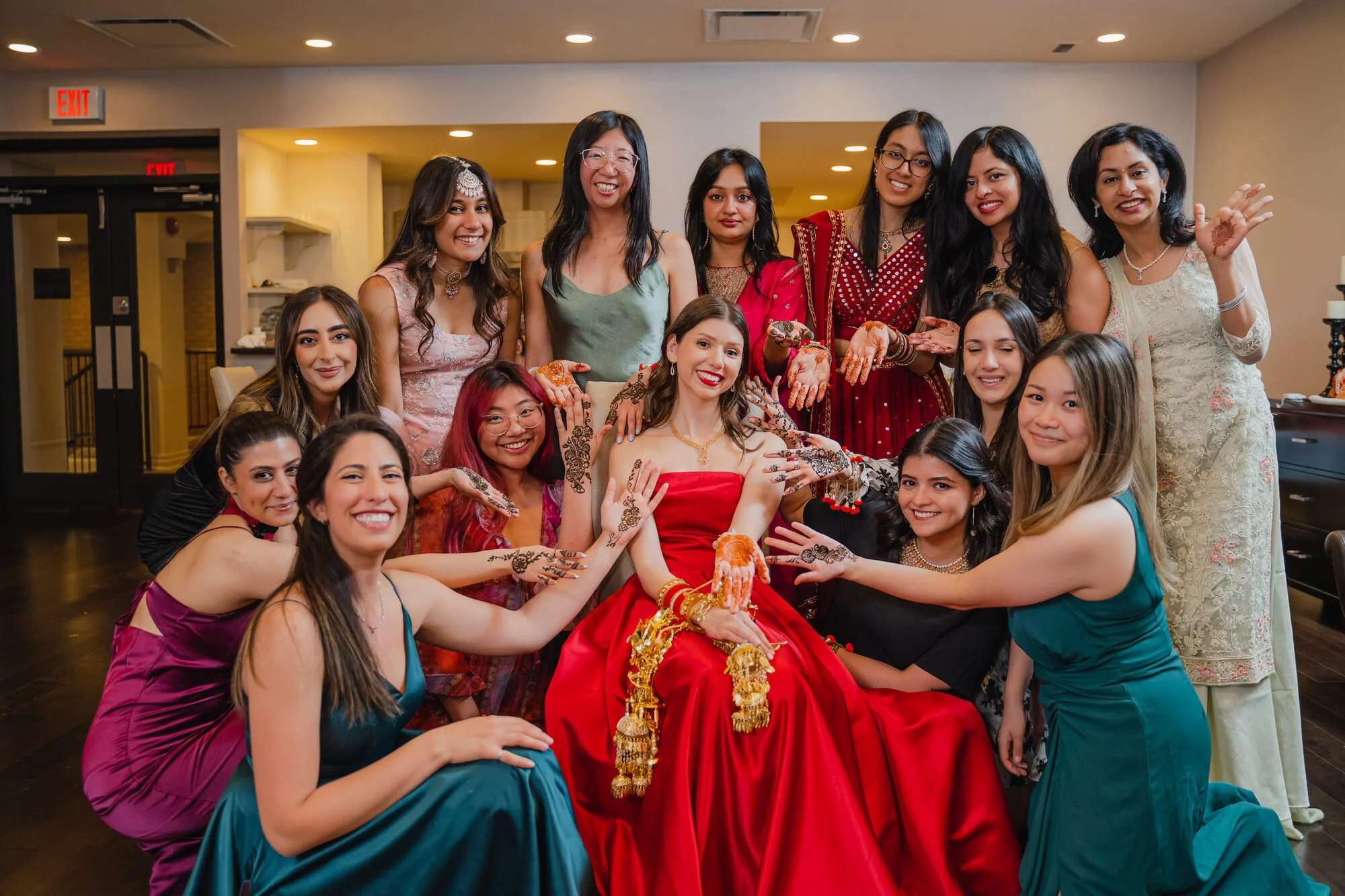
Selin and Shrey didn't choose between them. They had both, on the same night, in the same room.
We're Tess and Jo of Jo Anto Photography, a husband-and-wife documentary wedding photography and film team in Toronto, and multicultural weddings are the work we're most at home in. This night was one of our favourites, and one of the most emotional evenings we've photographed.
What Is a Kına Gecesi? The Turkish Henna Night
If you haven't been to one, a Turkish kına gecesi is not the party most people expect.
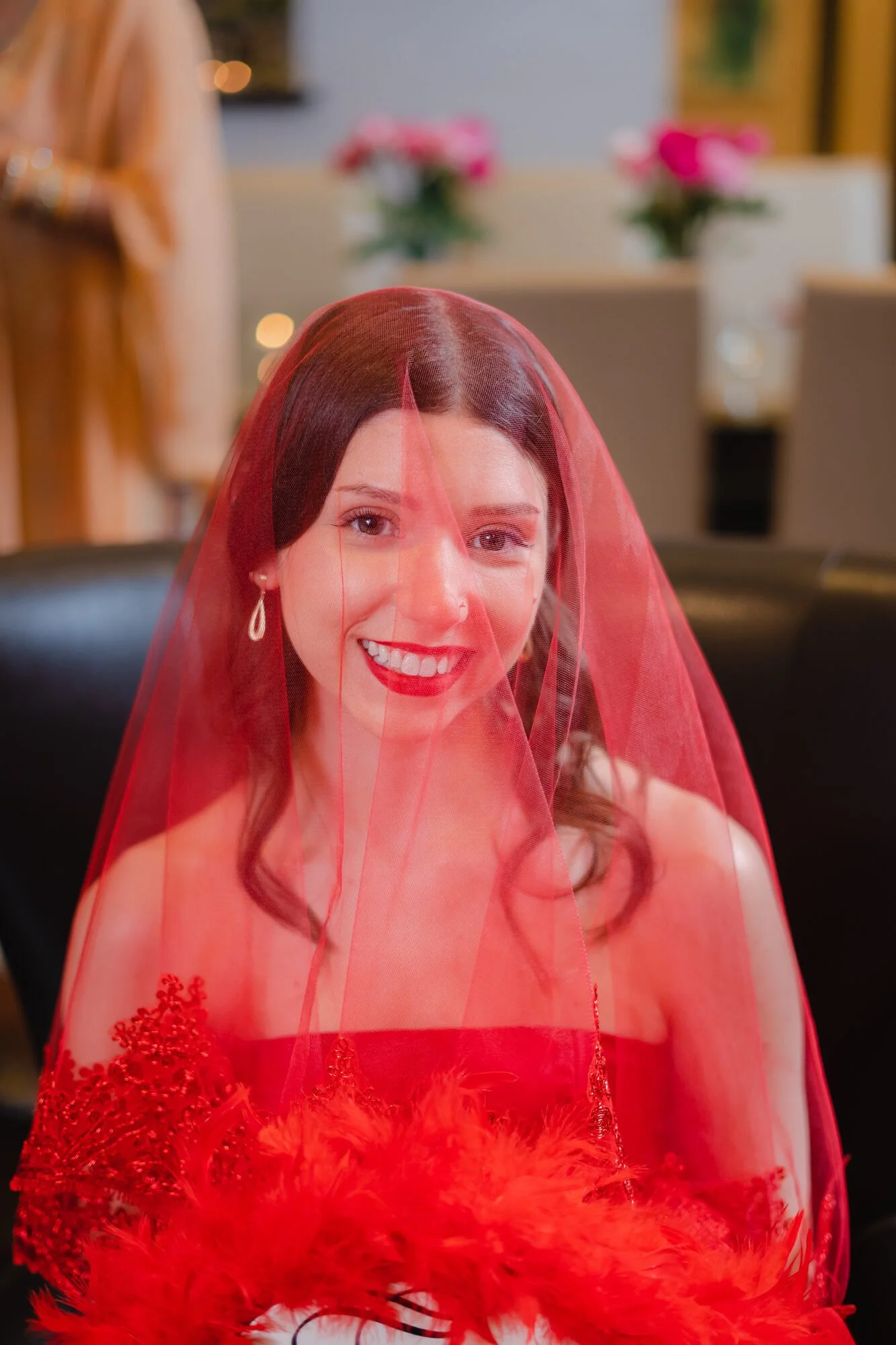
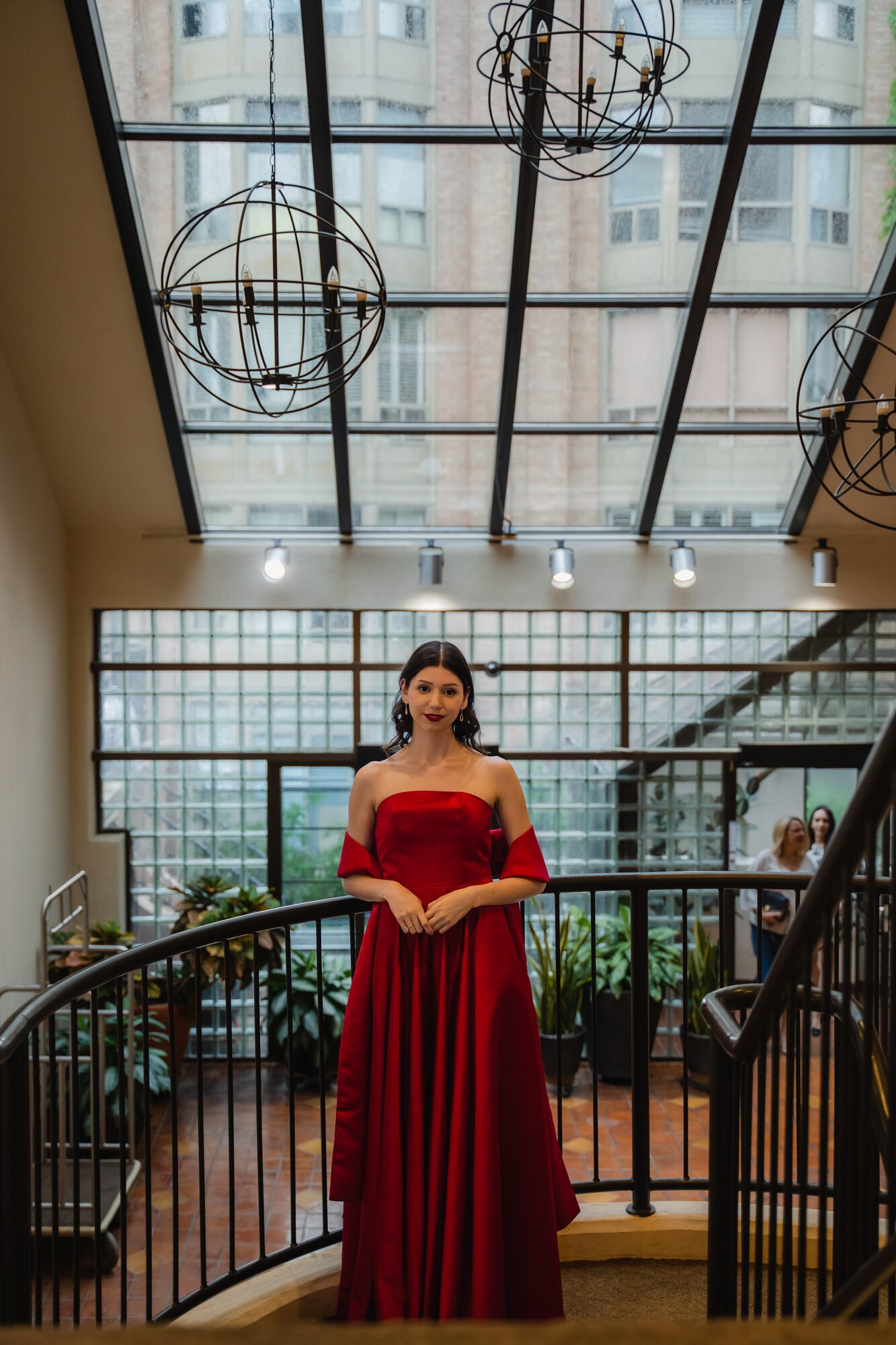
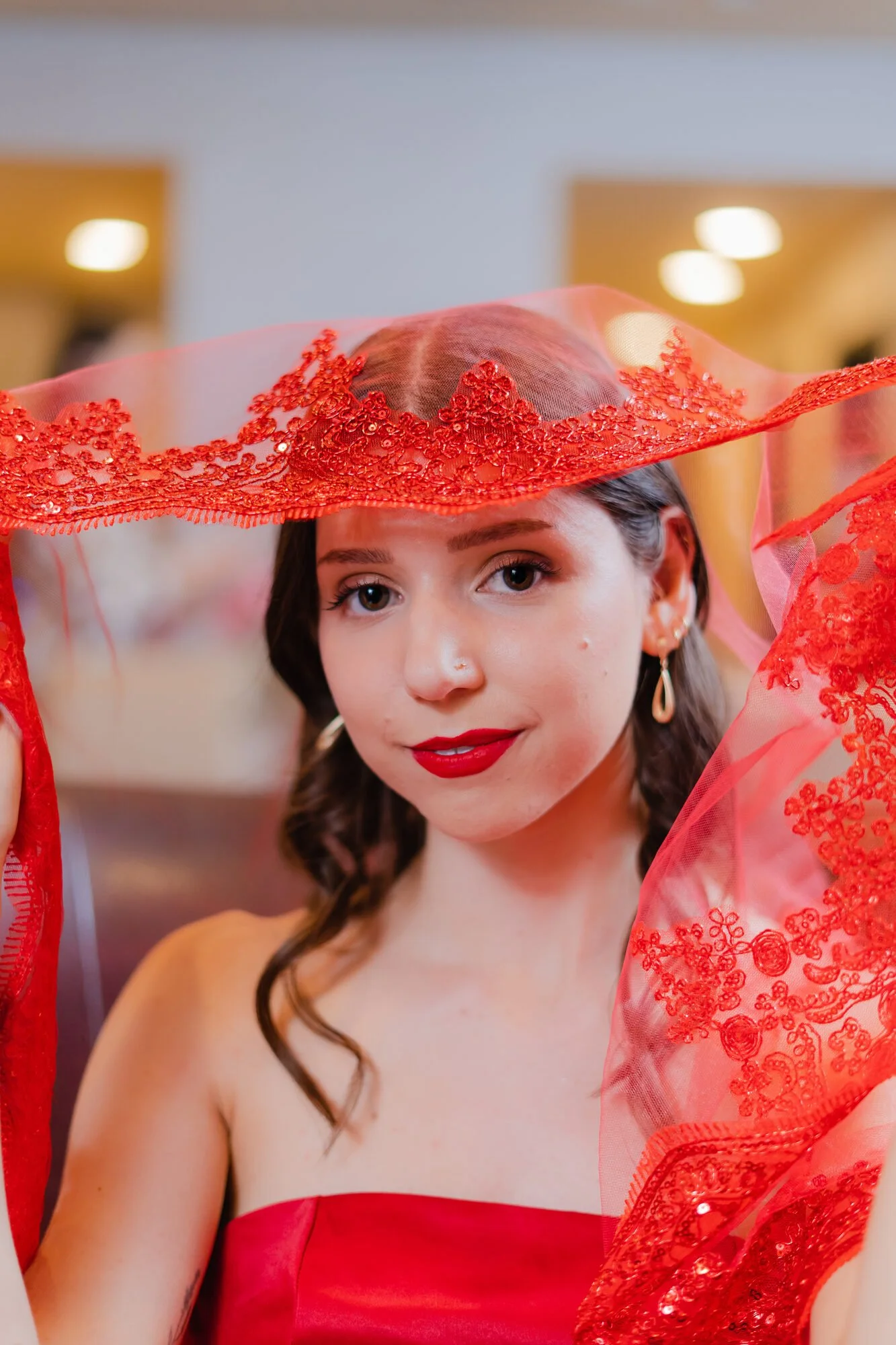
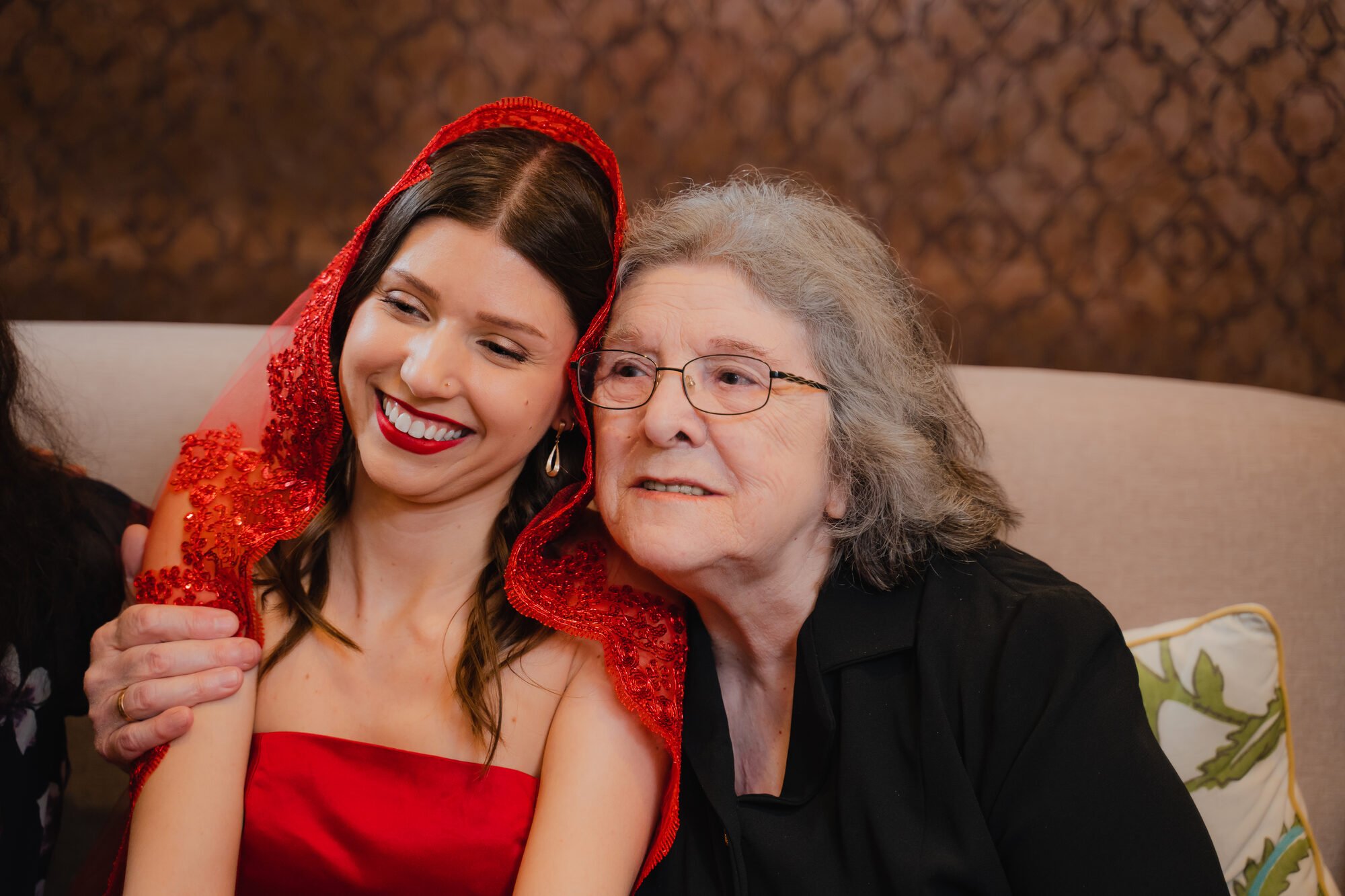
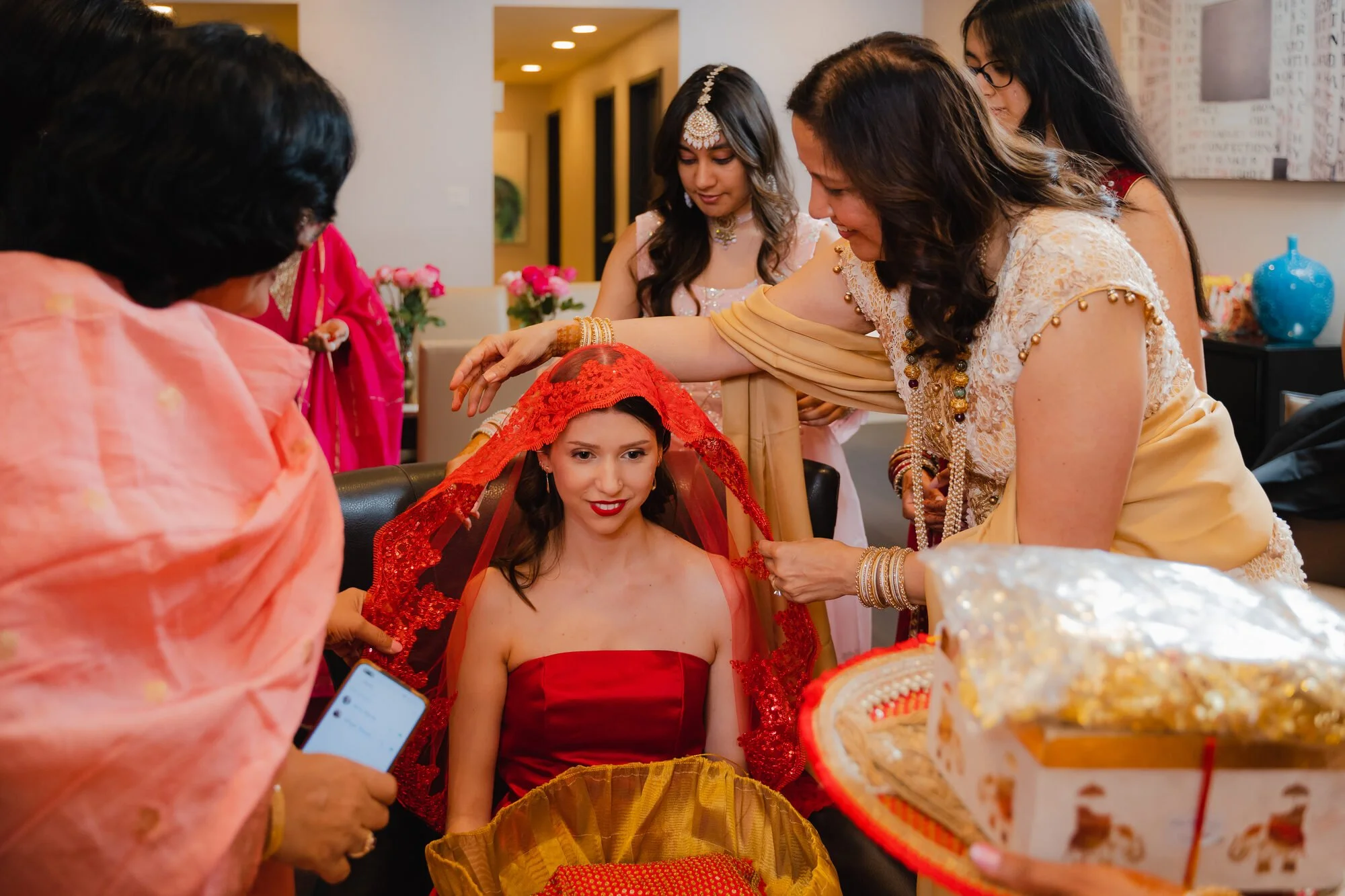
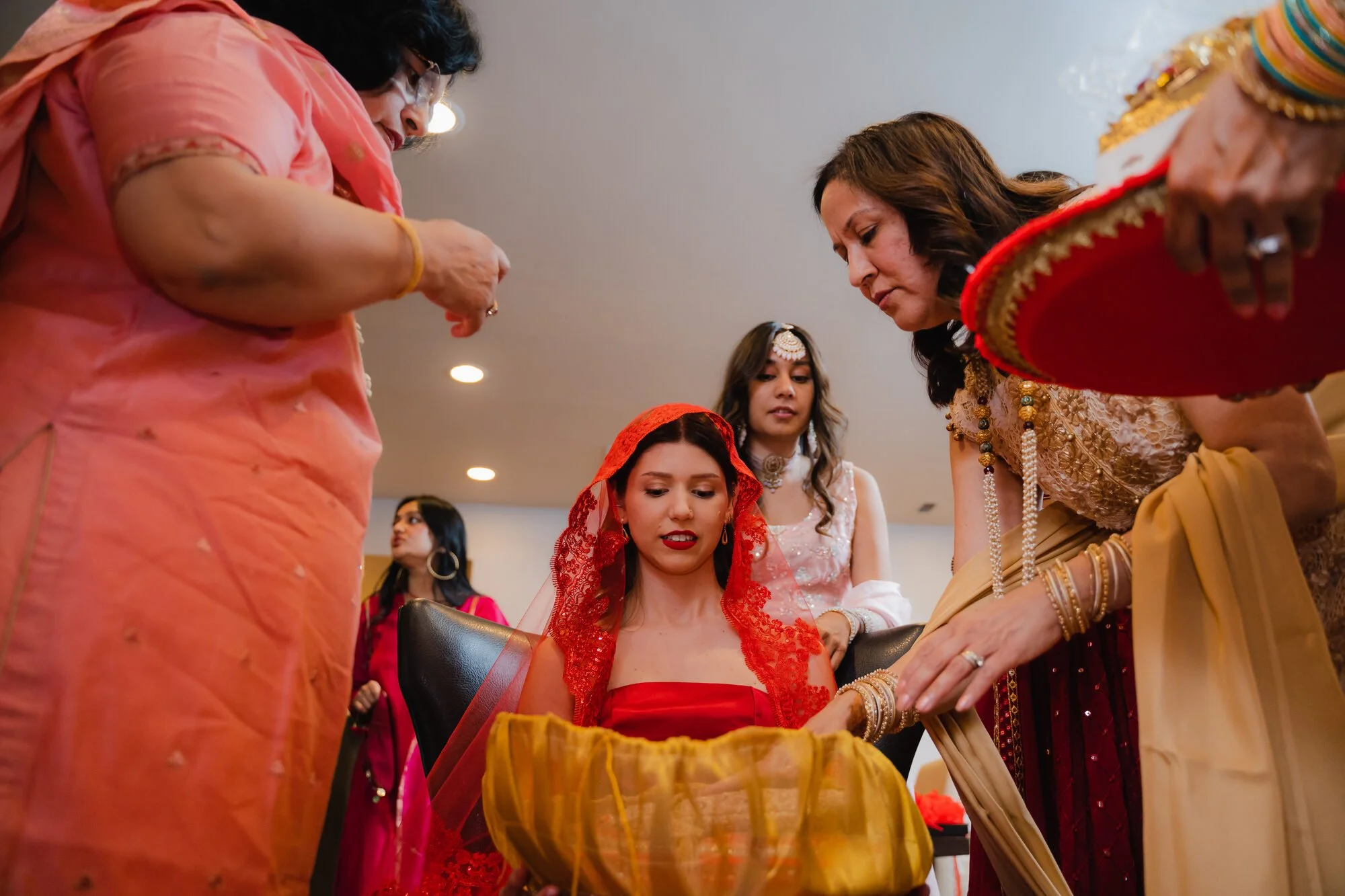
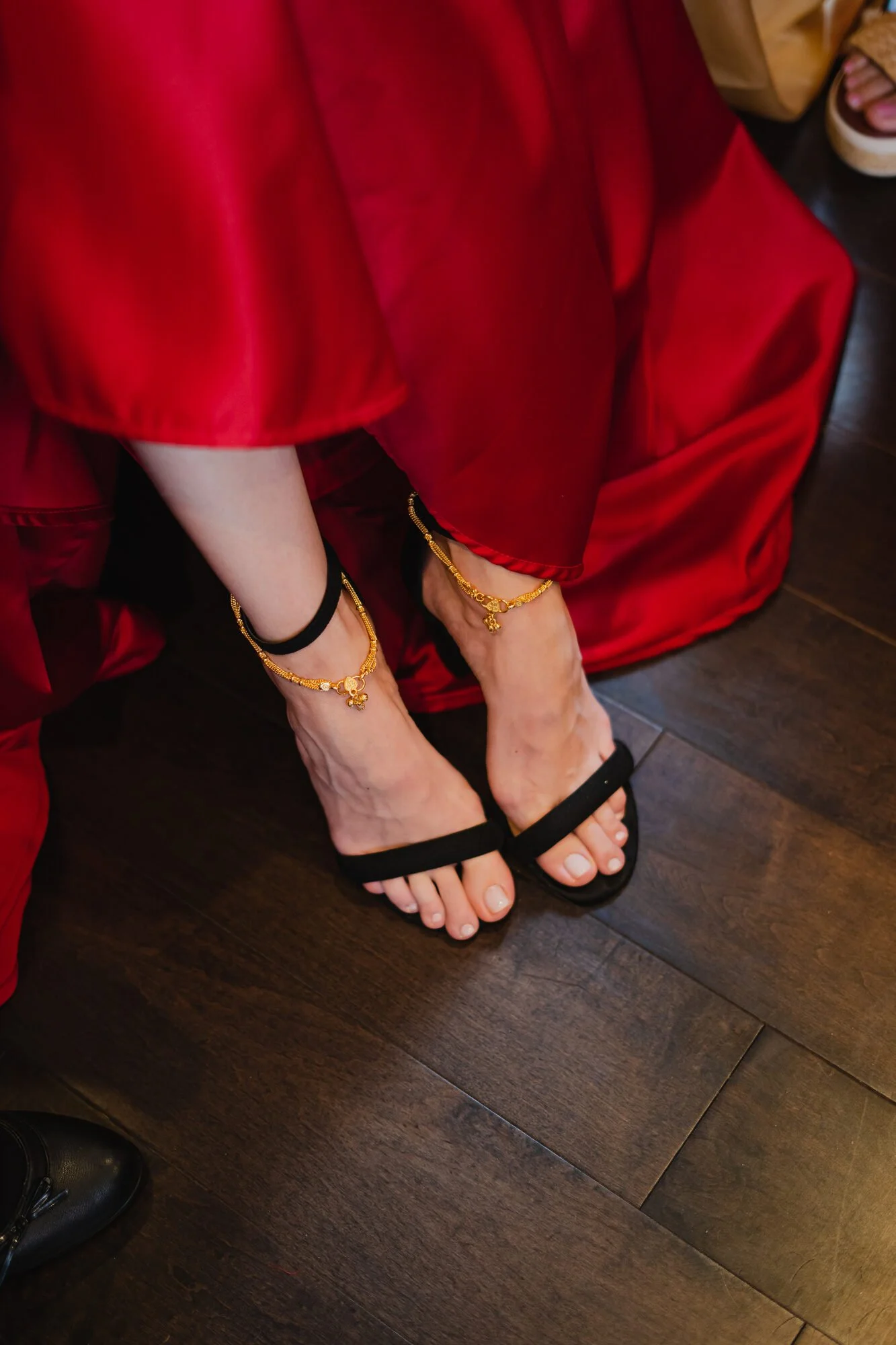
It's traditionally held a day or two before the wedding, hosted by the bride's family. The bride wears a bindallı, a velvet dress heavy with gold embroidery — the name means "a thousand branches" — usually in red or burgundy. A red veil is placed over her face.
Then the room does something remarkable. Guests carry candles, the lights go low, and the women sing. The songs are deliberately sad ones like Yüksek Yüksek Tepelere and Kınayı Getir Aney. They are sung to make the bride cry, because the night is a farewell to her family home, and her tears are understood as a sign of how much she loves them.
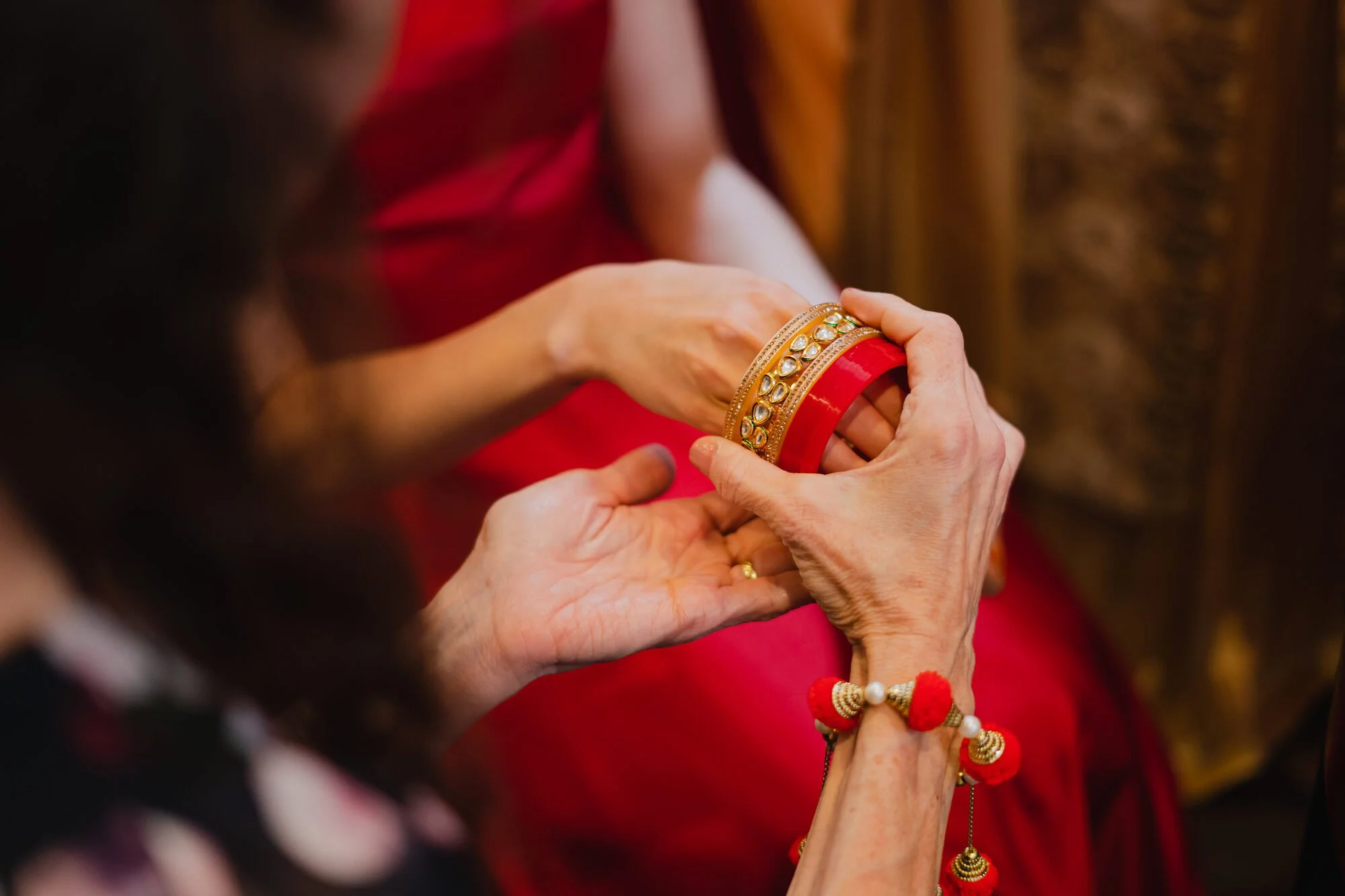
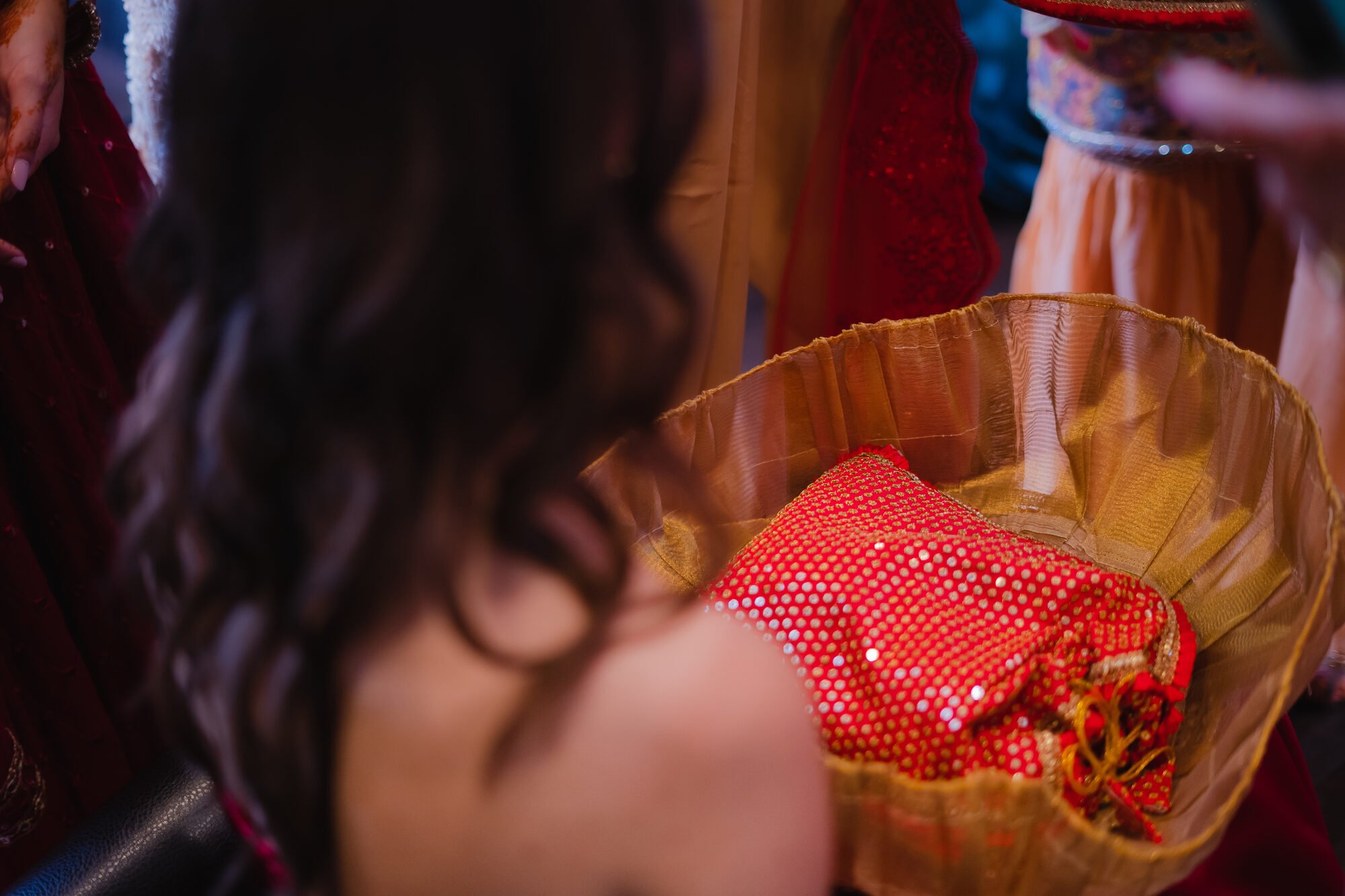
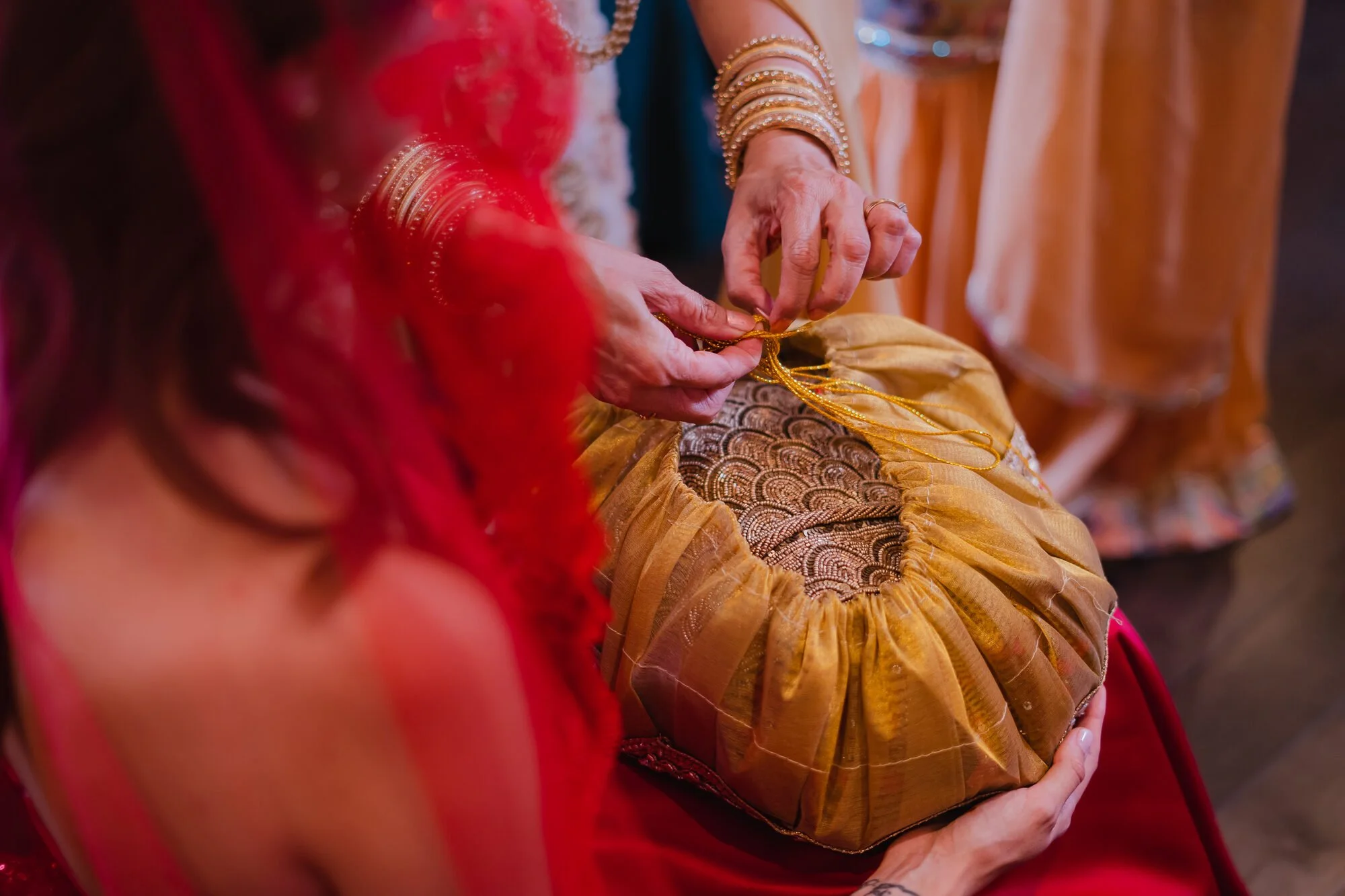
Henna is placed in her palm, traditionally by the mother-in-law, often with a gold coin pressed into it, and her hand is wrapped. In some families the bride keeps her fist closed until she's given the gold, which is where a lot of the laughter comes from.
Grief and celebration in the same forty minutes. As documentary photographers, there is almost nothing better to be in the room for.
And the Mehndi
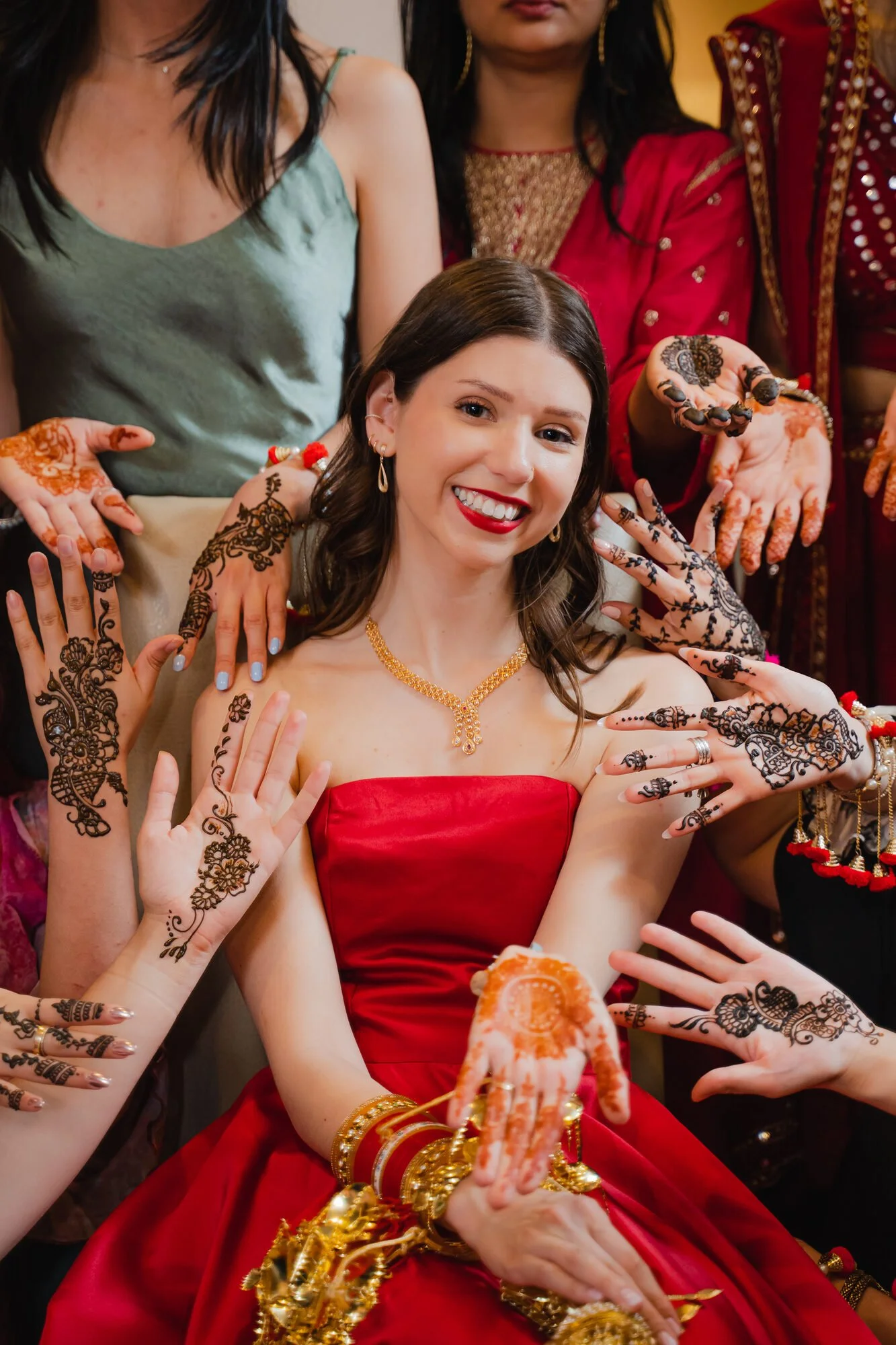
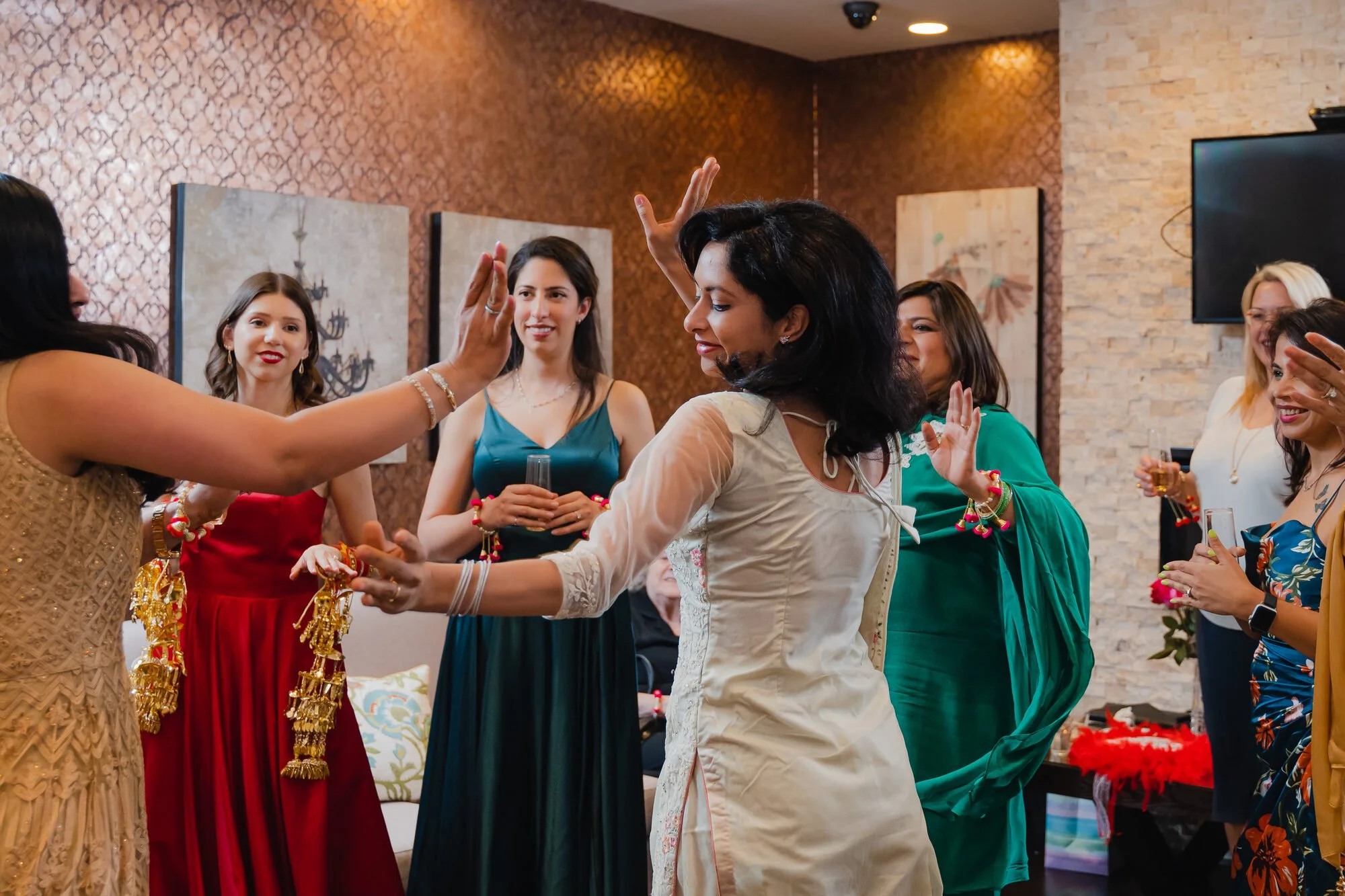
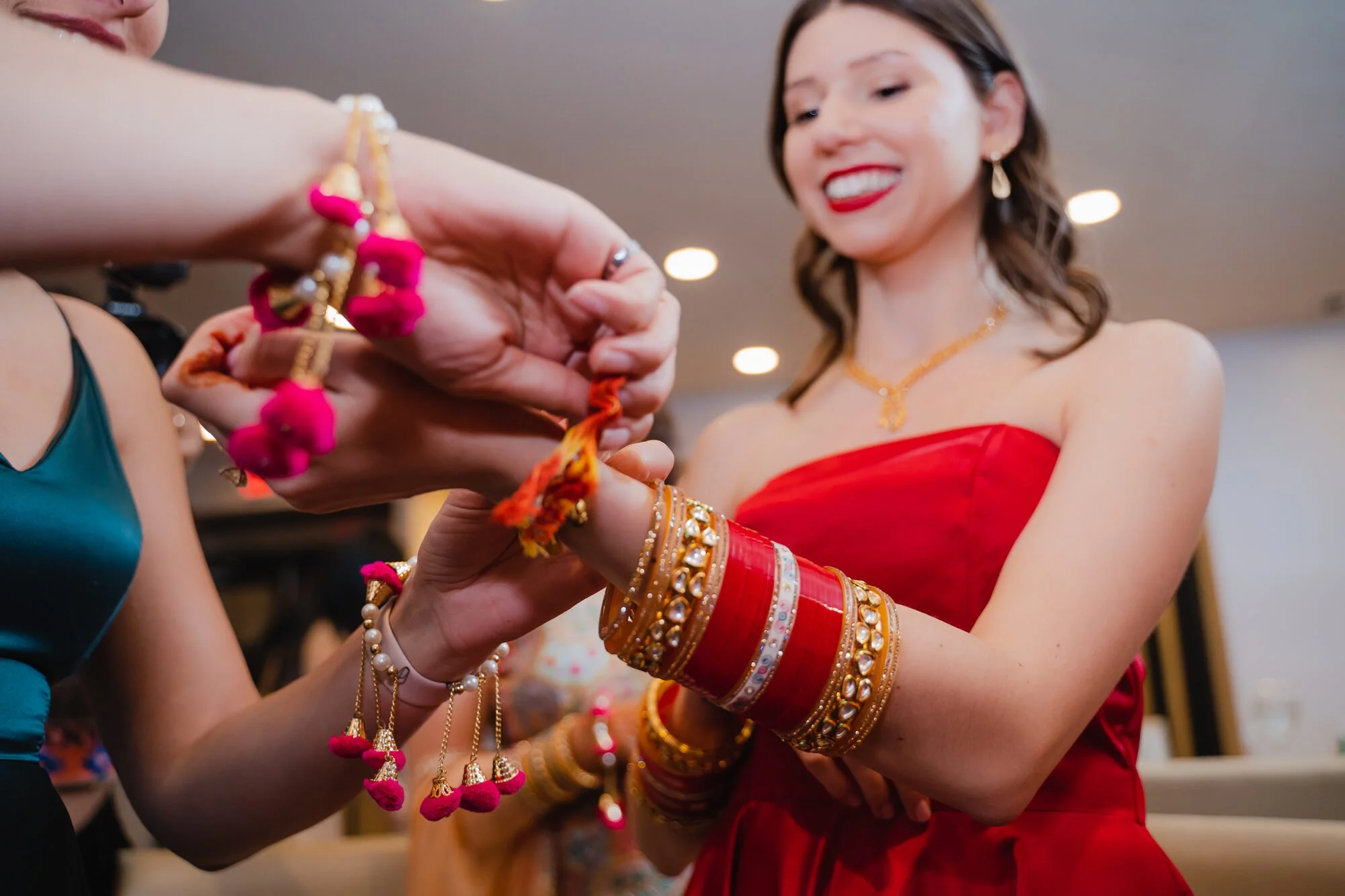
The Indian mehndi runs on a different energy: bright, loud, colourful, hours of intricate henna work on the bride's hands and feet, music, food and dancing that runs late.
Where the kına gecesi is candles and quiet and tears, the mehndi is drums and colour and everyone on their feet. Putting them in one night gives you a genuine emotional arc, from the hush of the candles into a room that doesn't stop moving.
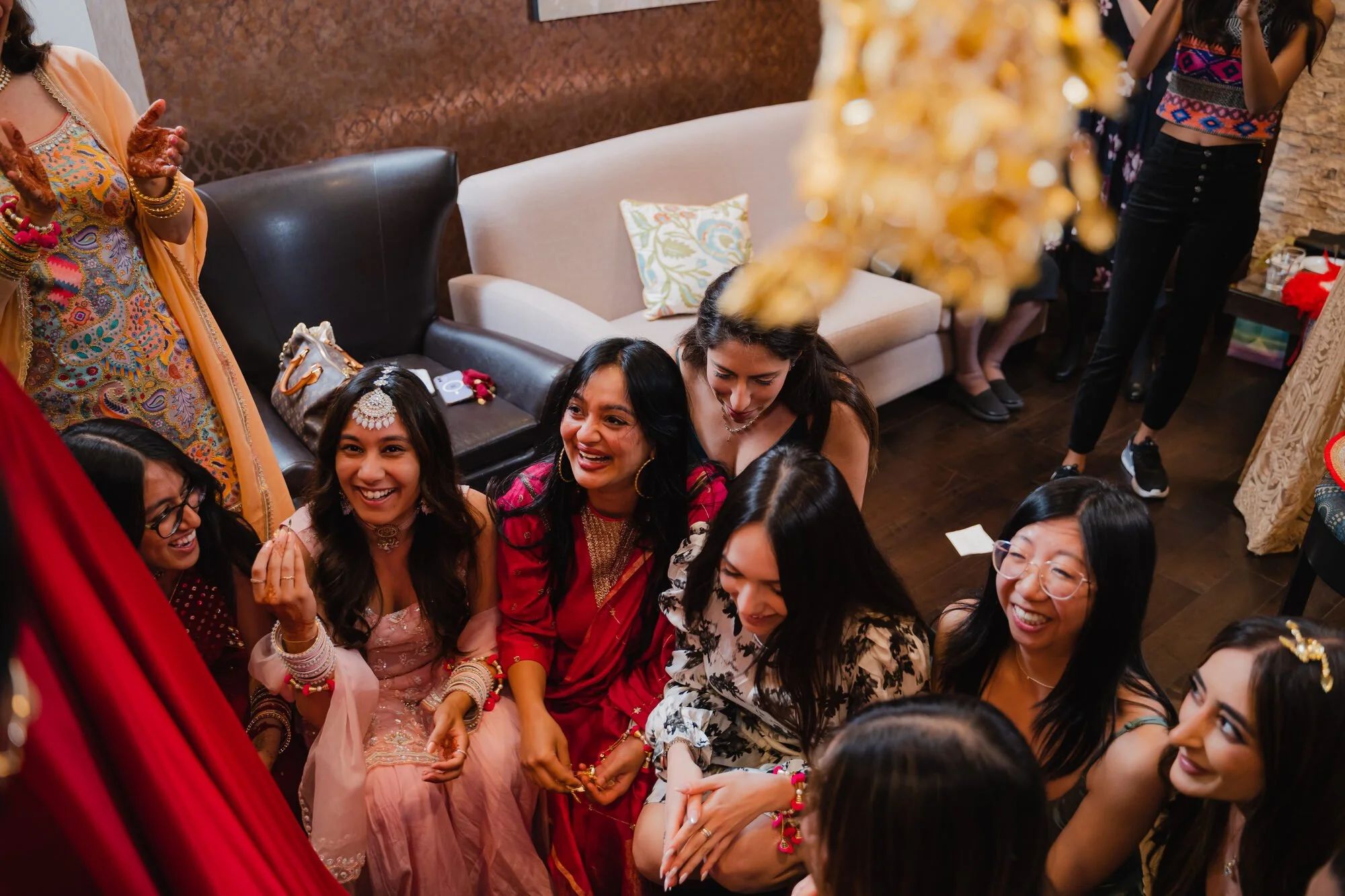
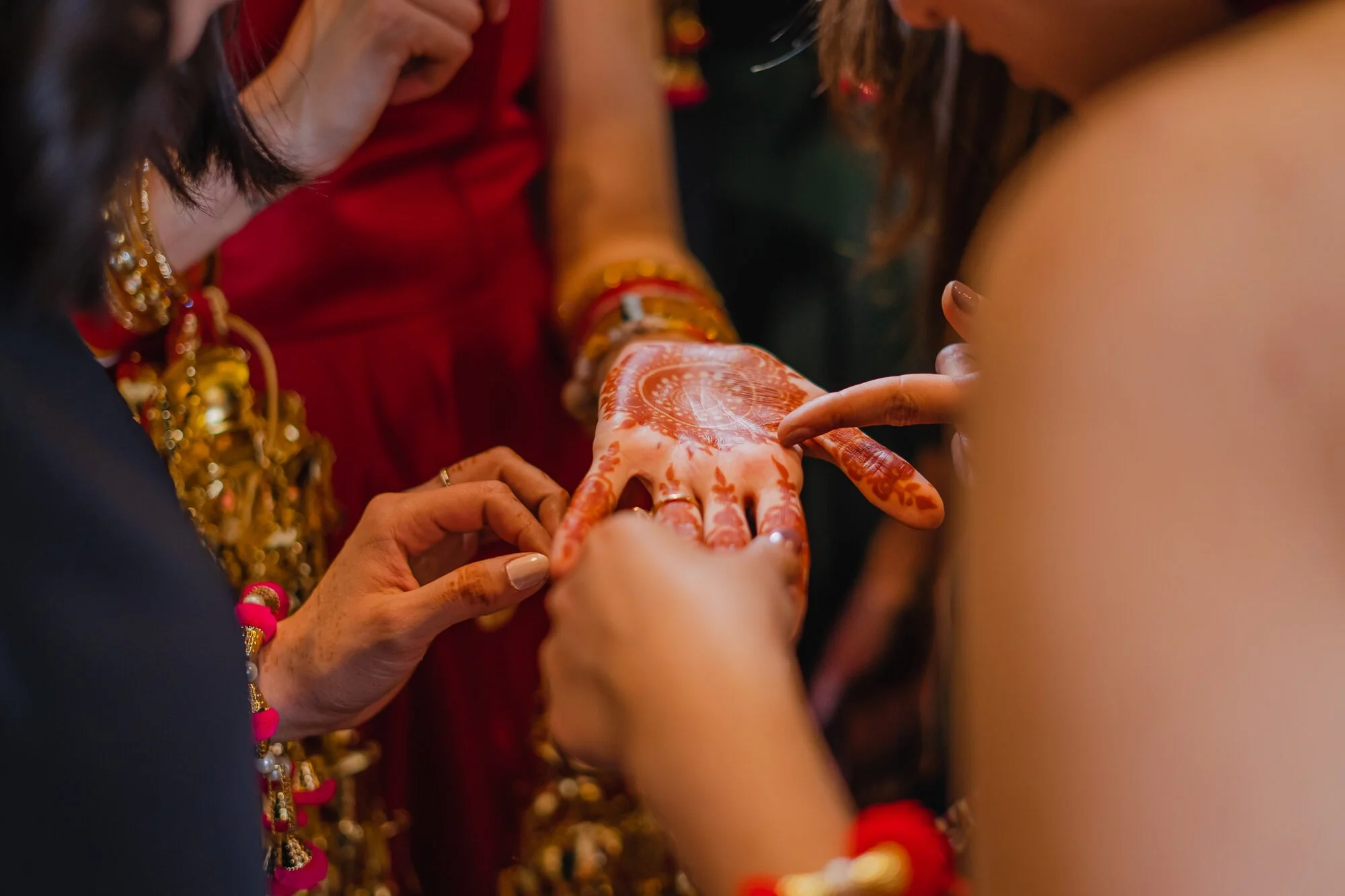
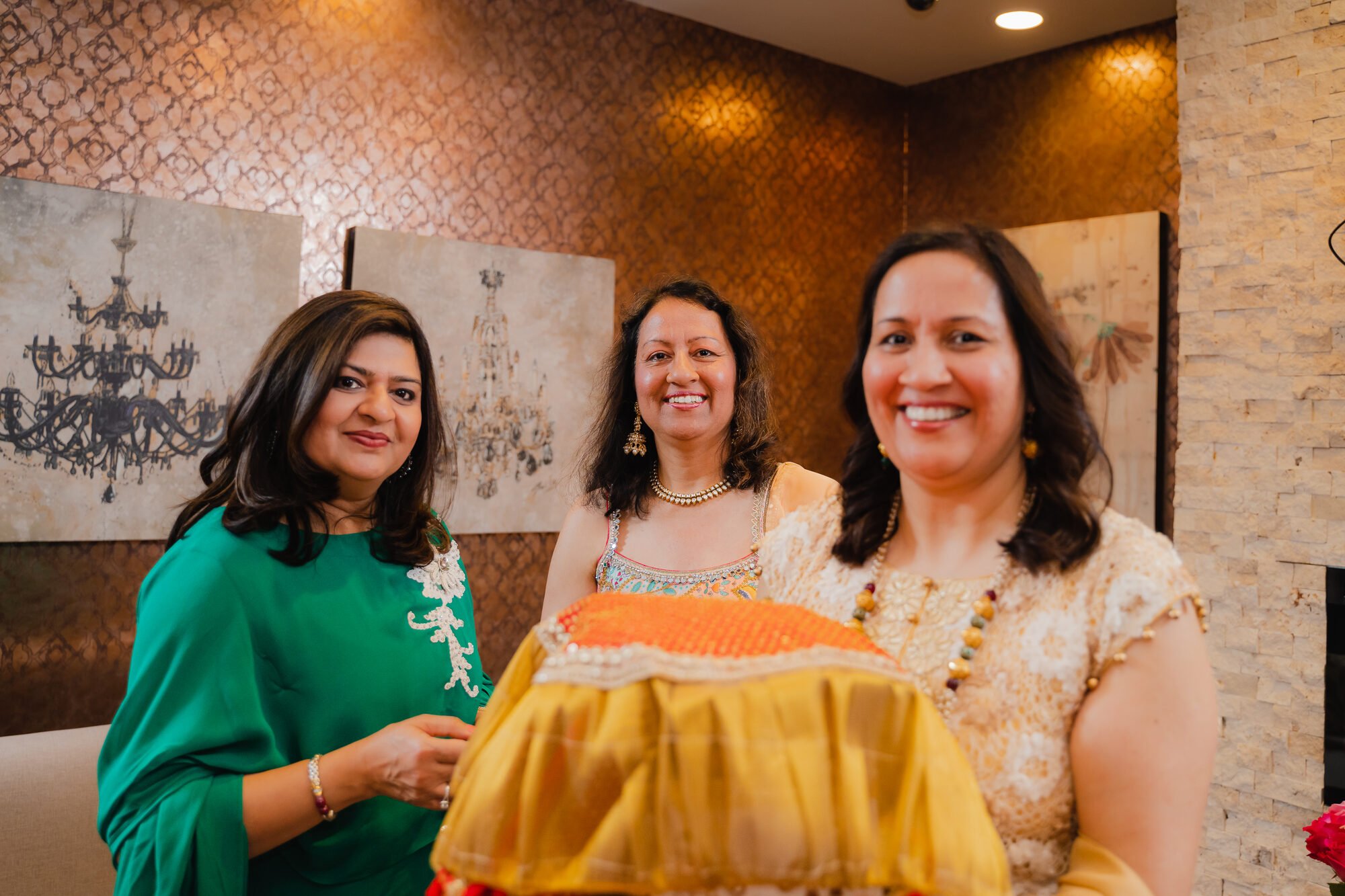
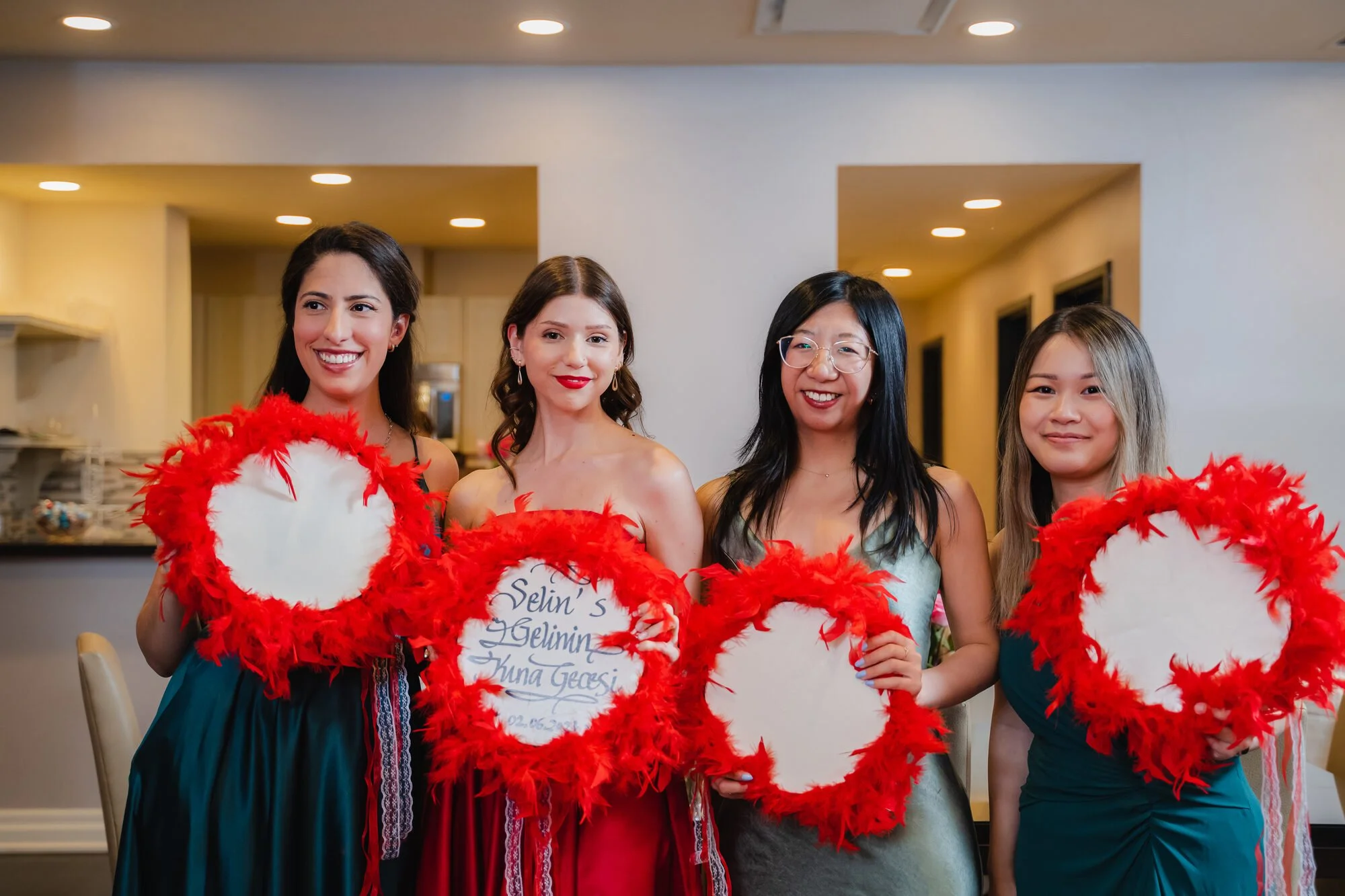
Photographing a Blended Henna Night
Two traditions in one evening means two completely different lighting situations, two different paces, and moments that will not happen twice.
That's why we work as a pair. During the candle procession, one of us stays with the bride's face under the veil while the other holds the wide frame of the room — the mothers, the aunts, the candles, the singing. In the mehndi, one of us works close on the henna detail and the hands while the other stays on the dance floor. With a single photographer, you choose. With two, you don't have to.
A few things we've learned shooting nights like this:
The emotional peak comes early. The candle procession and the henna placing often happen in the first hour. Coverage that starts "when the party gets going" misses the entire reason the night exists
It's very dark on purpose. The candlelight is the point, so it needs photographers comfortable working in low light without flattening the room with flash
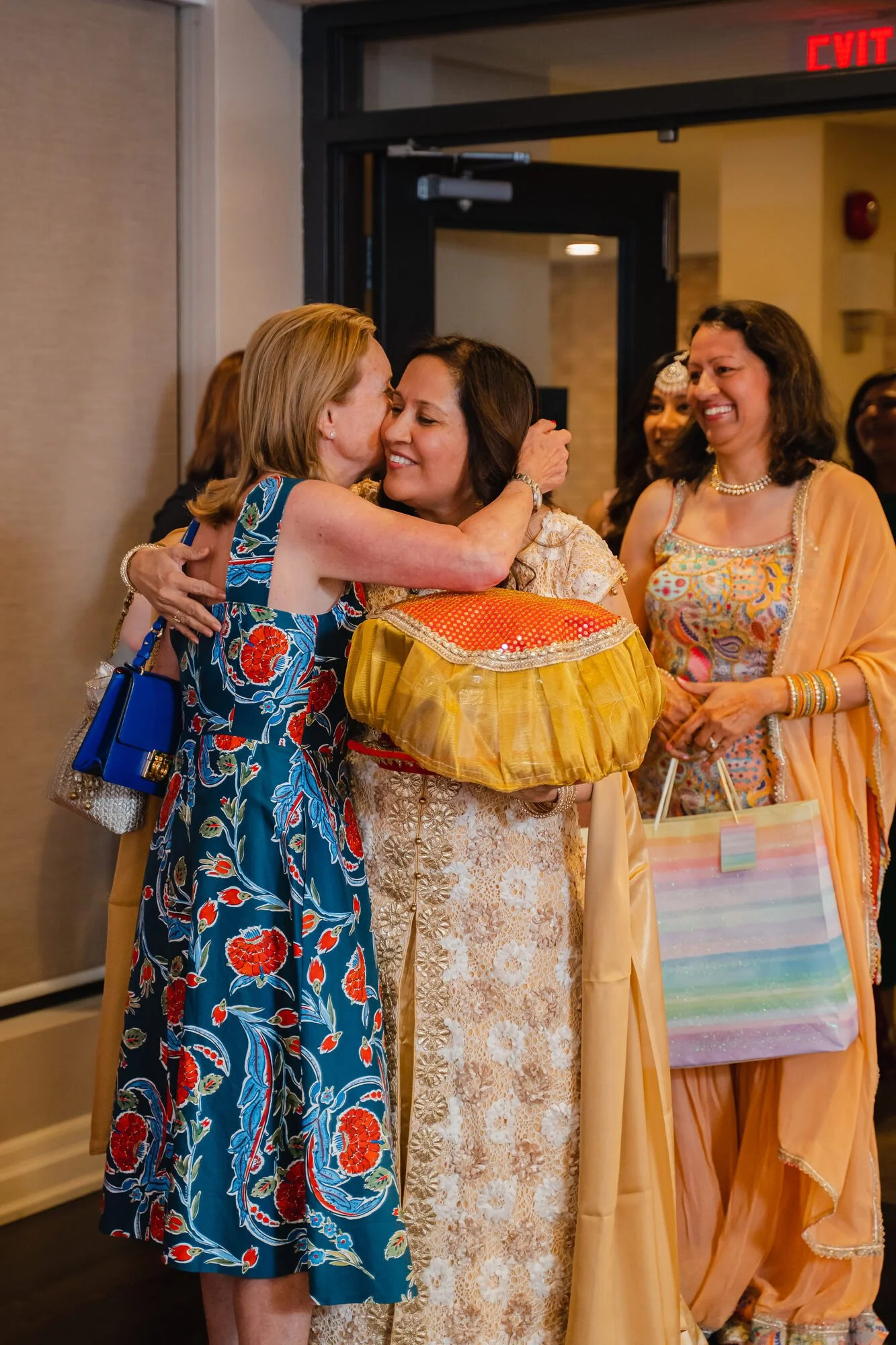
Elders matter more than the decor. The grandmother watching from the side, the mother who can't look up. Those frames are the ones families come back to
Nobody explains the running order to the photographer. We ask families in advance who places the henna, whether there's a gold coin, which songs are being sung, and what order the two traditions run in
We're documentary photographers recognized by Fearless Photographers and the WPJA, and we photograph and film, so a night like this can be covered by the two of us without adding a crew to a family gathering.
Planning a Blended Henna Night
If you're combining traditions from two cultures, a few things worth thinking about:
Decide the order and tell your families. Most couples run the quieter kına gecesi first and let the mehndi carry the rest of the night. It flows better emotionally and it lets elders participate before it gets loud
Two outfits, or one. Some brides change from the bindallı into mehndi wear. Build fifteen minutes into the timeline if so
Brief both sides. Guests from one culture often have no idea what's coming in the other's ceremony. A short explanation from an MC or a line in the invite turns confusion into participation
Give the henna artist real time. Bridal mehndi can take hours. It usually starts well before guests arrive, and that quiet early stretch produces beautiful photographs
Book coverage for the whole event, not the highlights. Adding hours on the night itself costs roughly double what the same hours cost planned in advance
Frequently Asked Questions
-
A Turkish henna night held a day or two before the wedding, hosted by the bride's family. The bride wears an embroidered bindallı dress and a red veil, guests carry candles and sing traditional songs, and henna is placed in her palm, often with a gold coin.
-
Both are pre-wedding henna celebrations. The Turkish kına gecesi is more ceremonial and deliberately emotional, built around candles, songs and a farewell to the bride's family. The Indian mehndi is longer and more festive, centred on detailed henna work, music and dancing. Many blended families now hold both.
-
It's intentional. The songs are chosen to move her, because the night marks her leaving her family home, and her tears are traditionally seen as an expression of love for her family.
-
Yes. Selin and Shrey held both in one evening, and it worked beautifully. It simply needs a clear running order and a quick brief for guests unfamiliar with each tradition.
-
Yes. Multicultural and multi-event weddings are most of our work across Toronto and the GTA. See our wedding galleries.
-
Yes, including henna nights, mehndi, haldi, sangeet, ceremony and reception. See our wedding packages.
Planning a Multi Cultural Wedding In Toronto?
If you're planning a kına gecesi, a mehndi, a blend of both, or a completely new blend of wedding celebrations, we would love to hear about it. Tell us which traditions your families are bringing and the dates you're holding, and we'll come back with availability.